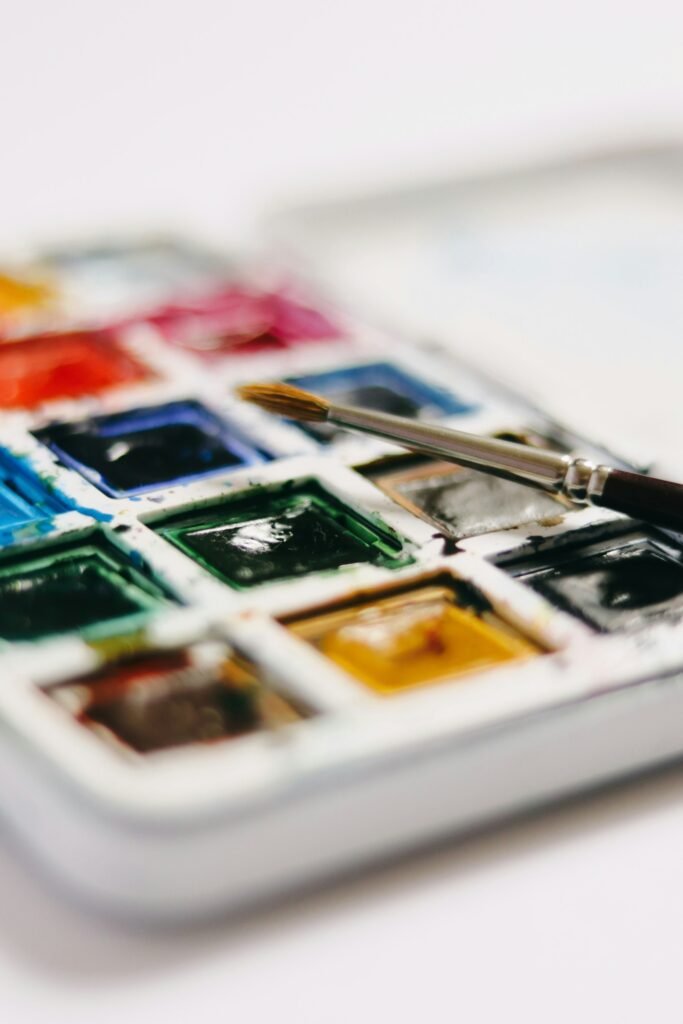
Once you have a few paints, the real magic starts on the palette. Mixing your own colors teaches you more about watercolor than any set of tubes, and it keeps your paintings looking like they belong together. Here are five things to know about mixing.
1. Know your warm and cool primaries
Every primary leans one way. A warm red leans toward orange, a cool red leans toward purple. The same is true for yellows and blues. Mixing two colors that lean toward each other gives clean, bright results: a cool yellow and a warm blue make a fresh green, because both already lean green.
2. Mix greens on purpose
Greens straight from the tube often look flat next to real leaves. Try mixing your own: blue plus yellow for a basic green, a touch of red to calm it down, and more yellow for spring growth. Keep a small chart of the greens you like, with the paints you used written beside each one.
3. Add water, not white
In watercolor, the paper is your white. To make a color lighter, add more water instead of white paint. This keeps the color transparent and lets the light bounce off the paper, which is what makes watercolor glow.
4. Use complements to soften
Colors opposite each other on the color wheel, like red and green or orange and blue, are complements. A tiny touch of a color’s complement makes it softer and more natural. Too much turns it gray-brown, which is useful for shadows, stems, and earth.
5. Don’t over-mix
Two or three paints in a mix is plenty. The more pigments you add, the duller the color becomes. Sometimes the most beautiful mixes happen on the paper itself: drop two colors side by side while wet and let them blend on their own.
Your exercise: a green chart
Draw a small grid. Along the top, write your yellows; down the side, your blues. In each square, mix that yellow with that blue. You’ll end up with a chart of greens you can use for every leaf you paint. Label it and keep it beside your palette.
Next in the Art Blog: a short history of botanical painting.