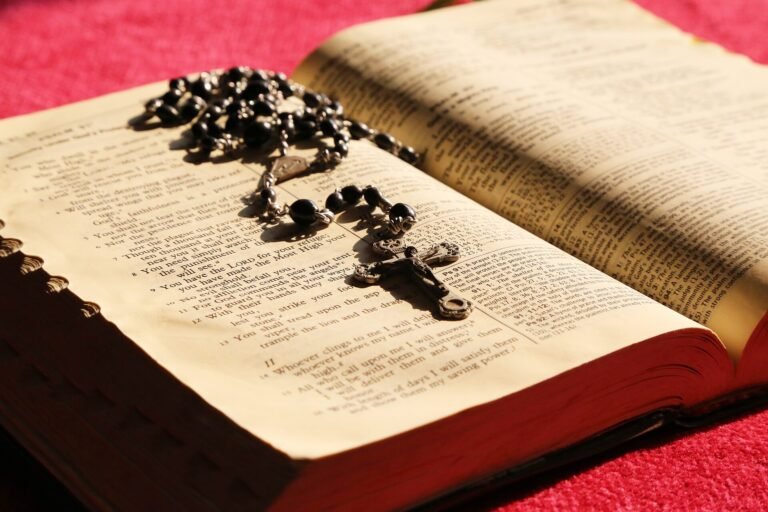
Praying the Rosary: A Garden of Prayer From the Gospels
The history of the Rosary, how its prayers come from the Bible, the Our Father Jesus taught us, and a simple way to begin.
Catholic means universal: one Church that breathes with two lungs, East and West. Whether you’re curious, returning, or simply looking for peace, you’re welcome here.
You don’t need a church full of people to pray. Jesus himself went off alone to pray, and taught us to do the same. Here is a simple way to begin, drawing on both East and West.
But when you pray, go into your room and shut the door and pray to your Father who is in secret. (Matthew 6:6)
Choose a quiet spot. Add an icon or crucifix, a candle, and a Bible. Facing east is a lovely old custom.
Light it slowly and let it mark the moment: now I'm with God.
Make the sign of the cross three times, for the Father, the Son, and the Holy Spirit.
The Trisagion and the Our Father in the East, or the Our Father and Hail Mary in the West.
A Psalm or a few verses of the Gospel. Read slowly, and stop where a word speaks to you.
Repeat "Lord Jesus Christ, Son of God, have mercy on me, a sinner" on a prayer rope, or pray a decade of the rosary. Or do as the desert monks did before prayer ropes were made: gather a handful of small stones and drop one into a bowl with each prayer.
Name those you love, those who are hurting, and those who have died. Then pray for your enemies too, those who want to hurt others or you: "Love your enemies and pray for those who persecute you" (Matthew 5:44). It helps you let go of pride and ego.
Sit quietly for a few minutes. Prayer is listening as much as speaking.
Take your prayer outdoors: a trail in the woods, a bench in the park, or a corner of the garden. Let the trees and the birdsong remind you whose world this is.
Roll out your yoga mat and settle in with a few slow, gentle stretches. A body at ease makes it easier for the heart to be still.
Play quiet instrumental music or gentle chant, soft enough to fade into the background so it carries your prayer instead of pulling you away from it.
Walk slowly and match a short prayer to your steps and breath. Every path can become a pilgrimage.
Consider the lilies of the field, how they grow; they neither toil nor spin. (Matthew 6:28)
Benedict's monks prayed as they worked. Weed, water, and harvest slowly, and let each task become a prayer.
Walk without your phone. Notice the sky, the birds, and the trees, and thank God for each one, the way Francis did.
Francis praised God for Brother Sun, Sister Moon, Brother Wind, and Sister Water. Name what you see, and give thanks.
Take your Bible to a bench or a garden chair. Read a few verses, then sit in the quiet.
Cook something simple, share it, and pray before and after you eat.
Each week give away one thing you don't need, or skip one purchase and give instead.
Benedict balanced prayer with work and rest, and Francis lovingly called his body “Brother Body.” Caring for the body God gave us is part of a prayerful life. A few small hints to get started:

Fill your plate with vegetables, beans, and whole grains, eat with the seasons, and say grace before you eat.
Start with a pot of lettuce or a tomato plant. Tending something living is a quiet kind of prayer.
Mint, basil, thyme, and chamomile grow happily on a windowsill and make a gentle evening tea.
Hold a few slow, quiet poses before bed and pair each breath with a short prayer.
Bodyweight squats, push-ups, and a brisk walk outdoors. No gym needed, just a little each day.
Make tea time a pause for prayer: one cup, no phone, a few minutes of stillness.

The Catholic Church is a family of Churches. Roman (Latin) Catholics and Byzantine Catholics share the same faith, the same sacraments, and full communion with the Pope, the Bishop of Rome. What differs is the way each one prays: the West with its quiet adoration, rosary, and Mass, the East with its icons, incense, and chanted Divine Liturgy.
When I returned to the faith, I found real beauty in praying in private. Those quiet minutes with Scripture and prayer have helped me a great deal, including through the PTSD I carry from my time in the military. That is why I want to share what I’ve learned with my brothers and sisters of every faith who believe in brotherly love and in helping those in need, from all walks of life.
Whatever your church, these practices belong to all Christians who share faith in Jesus Christ, and anyone is welcome to them as another way to meditate on Scripture and prayer. Read the ten treasures below, try a few minutes of prayer at home, and take whatever brings you closer to God in your daily life.
Christians share one faith in Jesus Christ, and many of the oldest practices of the Church can be lived by anyone, at home or in nature. Here are ten gifts of that common faith.
These gifts are meant to be shared. To our fellow Christians of every church: we hope these practices enrich your prayer and daily life, wherever you worship. And to our friends of other faiths, including our Muslim brothers and sisters, who also honor Jesus and Mary and treasure prayer, fasting, and generosity: you are warmly welcome to explore them too. Take whatever draws you closer to God and to His peace.
Busy days can leave us asking what our lives are really for. Christians of every tradition find a steady light in the Gospel: a reason for being, a sense of what is good and true, and a path home to God.
A life with purpose. Jesus said, "I came that they may have life, and have it abundantly" (John 10:10). He gently told us not to be weighed down by worldly cares: "do not be anxious about your life, what you shall eat or what you shall drink, nor about your body, what you shall put on". "Look at the birds of the air," He said, "your heavenly Father feeds them" (Matthew 6:25-26). Rather than storing up treasures on earth, He reminds us that "where your treasure is, there will your heart be also" (Matthew 6:21). So He invites us to "seek first his kingdom and his righteousness, and all these things shall be yours as well" (Matthew 6:33), and God promises "a future and a hope" (Jeremiah 29:11).
I am the way, and the truth, and the life. (John 14:6)
Every Christian tradition looks back to Jesus and the Twelve Apostles. The ancient Churches of East and West have kept the prayers and worship of those early centuries, and those treasures belong to all of us.
Built on the apostles. St. Paul tells every believer, "you are fellow citizens with the saints and members of the household of God, built upon the foundation of the apostles and prophets, Christ Jesus himself being the cornerstone" (Ephesians 2:19-20). He urged the first Christians to "hold to the traditions which you were taught by us" (2 Thessalonians 2:15).
Jesus Christ is the same yesterday and today and for ever. (Hebrews 13:8)
Eastern Christians speak of prayer as union with God through faith and love, growing slowly and quietly. Rather than trying to explain every mystery, we can bow before it and sing. Theology becomes a hymn of praise.
Holy, holy, holy. The prophet Isaiah heard the angels sing, "Holy, holy, holy is the LORD of hosts; the whole earth is full of his glory" (Isaiah 6:3), the same hymn the Church still sings today. For now, St. Paul says, "we see in a mirror dimly, but then face to face" (1 Corinthians 13:12).
O the depth of the riches and wisdom and knowledge of God! (Romans 11:33)
Candles, icons, incense, singing, bowing, and the sign of the cross: the old Churches pray with the whole body. You can bring the same practices home with a candle, an image, and a quiet song.
The Bible's own worship. The Psalms call us to "worship and bow down" and "kneel before the LORD, our Maker" (Psalm 95:6), to "taste and see that the LORD is good" (Psalm 34:8), and to sing, because "everything that breathes" was made to praise Him (Psalm 150:6). In heaven, St. John saw incense rising with the prayers of the saints (Revelation 8:3-4).
Let my prayer be counted as incense before thee. (Psalm 141:2)
Faith isn't only for Sunday. Prayer at home, seasons of fasting, generosity, and serving others turn ordinary days into a life of prayer.
Joy in the everyday. St. Paul invites us to "rejoice always, pray constantly, give thanks in all circumstances" (1 Thessalonians 5:16-18). Jesus taught us not to pray for show, the way some did on street corners to be seen, but to "go into your room and shut the door and pray to your Father who is in secret; and your Father who sees in secret will reward you" (Matthew 6:5-6). In the same way, He asks us to fast with a washed face and a light heart, as a quiet gift between us and the Father (Matthew 6:17-18). "God loves a cheerful giver" (2 Corinthians 9:7), and every small kindness counts: "as you did it to one of the least of these my brethren, you did it to me" (Matthew 25:40).
And whatever you do, in word or deed, do everything in the name of the Lord Jesus, giving thanks to God the Father through him. (Colossians 3:17)
Many of us carry old hurts. Bitterness wears down the heart. Jesus taught us to forgive, and prayer helps us ask for that grace, even when no one says sorry. Forgiving opens the heart to God's peace.
In the words of Jesus. He put forgiveness right into the prayer He taught us: "forgive us our debts, as we also have forgiven our debtors" (Matthew 6:12). When Peter asked if seven times was enough, Jesus answered, "I do not say to you seven times, but seventy times seven" (Matthew 18:22). And from the Cross He prayed for the very people who hurt Him: "Father, forgive them; for they know not what they do" (Luke 23:34).
Be kind to one another, tenderhearted, forgiving one another, as God in Christ forgave you. (Ephesians 4:32)
Grief, loss, and disappointment can leave deep wounds. Faith doesn't explain every sorrow, but it gives us a place to bring it, and a community to walk with us while we heal.
A God who comforts. The Lord "heals the brokenhearted, and binds up their wounds" (Psalm 147:3). He is "the God of all comfort, who comforts us in all our affliction, so that we may be able to comfort those who are in any affliction" (2 Corinthians 1:3-4). And one day "he will wipe away every tear from their eyes" (Revelation 21:4).
Come to me, all who labor and are heavy laden, and I will give you rest. (Matthew 11:28)
Children grow strong with roots: a home where prayer is normal, a clear sense of right and wrong, and simple family traditions like grace at meals and bedtime prayers.
Faith at the kitchen table. God asked families to keep His words close and "teach them diligently to your children, and shall talk of them when you sit in your house, and when you walk by the way, and when you lie down, and when you rise" (Deuteronomy 6:7). Jesus welcomed little ones with open arms: "Let the children come to me, do not hinder them; for to such belongs the kingdom of God" (Mark 10:14).
Train up a child in the way he should go, and when he is old he will not depart from it. (Proverbs 22:6)
Community is more than friendly faces. We gather around Christ to worship together at church, carry one another's joys and sorrows, and reach out to anyone who needs a helping hand, whatever their faith or background. In serving others, we meet Christ among us and find strength for everyday life.
Together in His name. The early Christians encouraged one another to "stir up one another to love and good works, not neglecting to meet together" (Hebrews 10:24-25), and to "rejoice with those who rejoice, weep with those who weep" (Romans 12:15). When Jesus told of the Good Samaritan, a man from another people and faith who stopped to help a stranger, He said simply, "Go and do likewise" (Luke 10:37).
For where two or three are gathered in my name, there am I in the midst of them. (Matthew 18:20)
At the heart of our shared faith is Jesus himself, who promised to be with us always. Christians meet him in Scripture, in prayer, and at the Lord's table, which the ancient Churches celebrate as the Eucharist.
Rooted in the Bible. On the night before he died, Jesus took bread and said, "This is my body" (Matthew 26:26). The first disciples took him at his word. They "devoted themselves to the apostles' teaching and fellowship, to the breaking of bread and the prayers" (Acts 2:42). On the road to Emmaus, the risen Lord was "known to them in the breaking of the bread" (Luke 24:35), and St. Paul handed on the same words of Jesus he had received (1 Corinthians 11:23-26).
Held for fifteen centuries. From the earliest writings after the New Testament, around the year 100, Christians in East and West believed that Christ is truly present in the bread and wine. For roughly 1,500 years this was the faith of nearly every Christian. In the 1500s, some Reformation churches came to understand the Lord's Supper differently, many as a memorial. Catholic and Orthodox Christians, along with Lutherans and some others, still hold to Christ's real presence today.
A gift of love. The Eucharist is believed to be the most beautiful gift and treasure ever given to us: God feeding his children with himself, just as he fed his people through Moses with manna in the desert. "Behold, I will rain bread from heaven for you" (Exodus 16:4). Jesus himself made the connection: "Your fathers ate the manna in the wilderness, and they died. This is the bread which comes down from heaven, that a man may eat of it and not die" (John 6:49-50). In a small piece of bread and a sip from the cup, heaven touches earth, and we are drawn into one family, made new, and sent out to love and help others.
I am the living bread which came down from heaven; if any one eats of this bread, he will live for ever. (John 6:51)
Many families live between the two traditions, and they find the rites complement each other rather than compete. A few gentle guidelines from families who do it well:
| From the East | From the West |
|---|---|
| Icon corner with a candle | Home altar with a crucifix and statues |
| The Jesus Prayer on a prayer rope | The Rosary |
| Akathist hymns and Vespers | Novenas and the Liturgy of the Hours |
| Sign of the cross three times | Eucharistic adoration |
| "Rejoice, O Virgin Theotokos" | The Hail Mary |
| The Trisagion: "Holy God, Holy Mighty, Holy Immortal" | The Divine Mercy Chaplet |
Two of the West’s great saints show us how to make an ordinary home a quiet place of prayer. Lay people can’t take both monastic rules at once, but anyone can borrow their rhythms and attitudes. The two fit together beautifully: Benedict gives steadiness and balance, Francis gives simplicity, joy, and love for the poor and for creation.
How I learned this. What I share here, I learned from people, not just from books. Orthodox monks, Franciscan friars, and Benedictine monks taught me how to be still and showed me how to truly pray. Faithful Muslims taught me too: watching them stop five times a day and turn their whole heart to God showed me what devotion really looks like. Their faith has been wounded by extremists who twist it into violence, just as some churches calling themselves Christian have taught hate and harm, the very opposite of what Jesus taught. He did not come to rule as a king on earth (“My kingship is not of this world,” John 18:36). He came to serve, and he asks us to help everyone. The more I studied the lives of these monks and friars, the more I found that I share their heart and their outlook on life. That is what brought me back to my faith, though I practice it very differently now than I did when I was younger. Learning their way of prayer changed me, but not overnight.
It took me months of private prayer and meditation, day after day. But as time went by, I began to feel calmer, happier, and far less negative and angry. I started to feel more compassion, and a weight I had carried since I was young slowly began to lift. My road here wasn’t a straight one. I spent time in many Christian churches outside the Catholic faith, and I even practiced Zen Buddhism for almost two years. Then I chose to start all over. I studied Judaism, the faith Jesus was born into, and how the Church took shape after his crucifixion. Once I discovered how the early Church Fathers prayed, and began walking under the guidance of the Franciscans, everything changed for me. In the end, it all comes down to prayers. The whole Bible spells this out, from beginning to end. But please don’t treat prayer as a wish list. God already knows what you are going to ask: “your Father knows what you need before you ask him” (Matthew 6:8). Prayer is simply time spent with him. I’m passing it on to you the same way it was given to me: one quiet step at a time.

Ora et labora: pray and work. St. Benedict taught that God is found in a steady, ordered day where prayer, work, and rest each have their place.
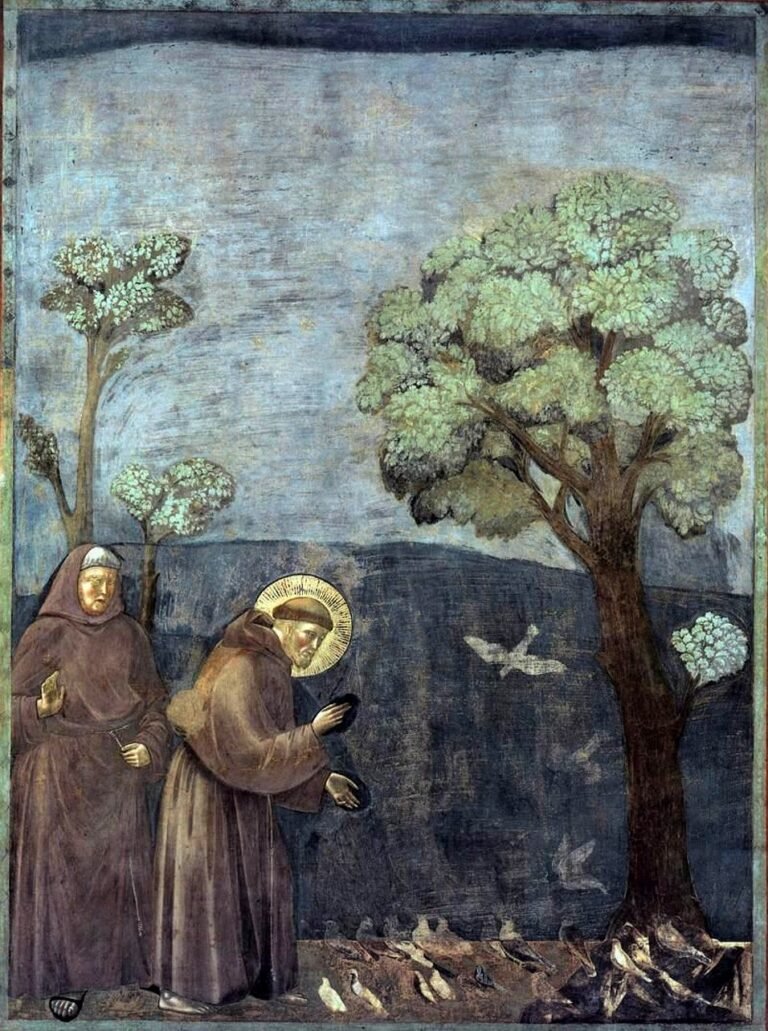
Brother Sun, Sister Moon. St. Francis lived the Gospel simply and joyfully, and saw God’s goodness in every living thing.

Want to go further? Lay people can make a formal commitment too. Benedictine oblates attach themselves to a monastery and promise to live its spirit at home, and the Secular Franciscan Order is a true order for lay men and women. Ask your parish priest how to find a monastery or fraternity near you.
Benedict anchors the morning and evening, Francis carries you through the day, and the East gives you the Jesus Prayer for bedtime. Start with something small you can keep, then let it grow.
Begin in silence. Make the sign of the cross, pray Morning Prayer or a Psalm, read a few verses slowly, and stretch gently.
Carry that quiet into the day. Work cheerfully, be gentle with everyone, step outside, move your body a little, and look for one person to help.
Share a simple supper from the garden or market, thank God for creation, look back over the day honestly, and pray Evening Prayer.
A few Yin Yoga poses, the Jesus Prayer on your prayer rope, an Our Father and a Hail Mary, and a prayer to your guardian angel.
Simple, gentle ways to pray, from the Jesus Prayer to praying with icons.
November 9, 2026
The history of the Rosary, how its prayers come from the Bible, the Our Father Jesus taught us, and a simple way to begin.
November 9, 2026
Gentle, hopeful prayers from the Psalms, the saints, East and West, and everyday life, to keep close.
November 4, 2026
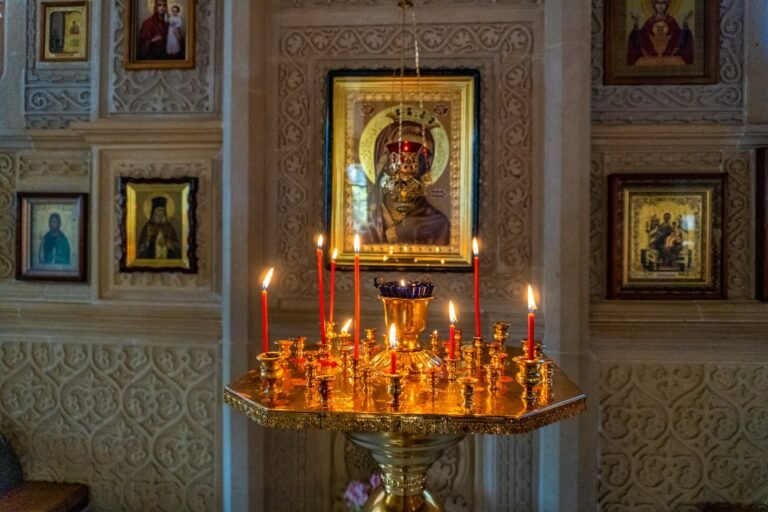
What an icon is, how to pray with one, and how to begin a small icon corner at home.
Scripture quotations are from the Revised Standard Version (RSV).
Join the Meditation Circle waitlist for quiet prayer gatherings, and keep praying with your own church family. Everyone is welcome here.


Seasonal notes on herbs, plant workshops and gardens, new lessons, and first look at new art.
Bees, Herbs & Gardens brings together plants, healthy cooking, art, and quiet meditation prayer. A place to help you gain peace.
© 2026 Bees, Herbs & Gardens. All rights reserved.