Every painter stands on the shoulders of those who came before. Walk through the centuries with us, from golden icons to Monet’s water lilies, and learn to see the world the way the great artists did.
Nobody starts with a timeline. We start with one painting that stops us in our tracks: an icon in a church, a postcard of Monet’s lilies, a page of pressed flowers in an old book. Begin there. Ask who made it, when, and why, and let one question lead to the next. Little by little, the map fills in.
Christ Pantocrator, 6th century, Saint Catherine's Monastery, Sinai
Icons and mosaics: windows of gold
Around 500 to 1450. In the Byzantine world, artists painted icons and set glittering mosaics to help people pray. Gold backgrounds stood for the light of heaven, and calm, still faces invited stillness in the one looking. These painters weren’t trying to copy the world, but to point beyond it.
Around 600 to 1200. In quiet monasteries, monks copied the Scriptures by hand and filled the pages with color: spiraling knots, tiny animals, and letters so ornate they became paintings of their own. The work was slow and prayerful, done one careful line at a time.
The Book of Kells, made by monks around the year 800, is one of the most beautiful books ever made.
The Chi Rho page, Book of Kells, about 800
The Large Piece of Turf, Albrecht Dürer, 1503
The Renaissance eye
Around 1300 to 1600. Painters like Giotto and Fra Angelico began to show real space, real light, and real feeling. Artists studied nature closely, and some turned their eyes to the ground at their feet.
In 1503, Albrecht Dürer painted a simple clump of grasses and wildflowers in watercolor and gouache, with such care that you can almost smell the earth. Five hundred years later, it’s still a lesson in seeing: the humblest corner of a garden is worth painting.
The golden age of botanical art
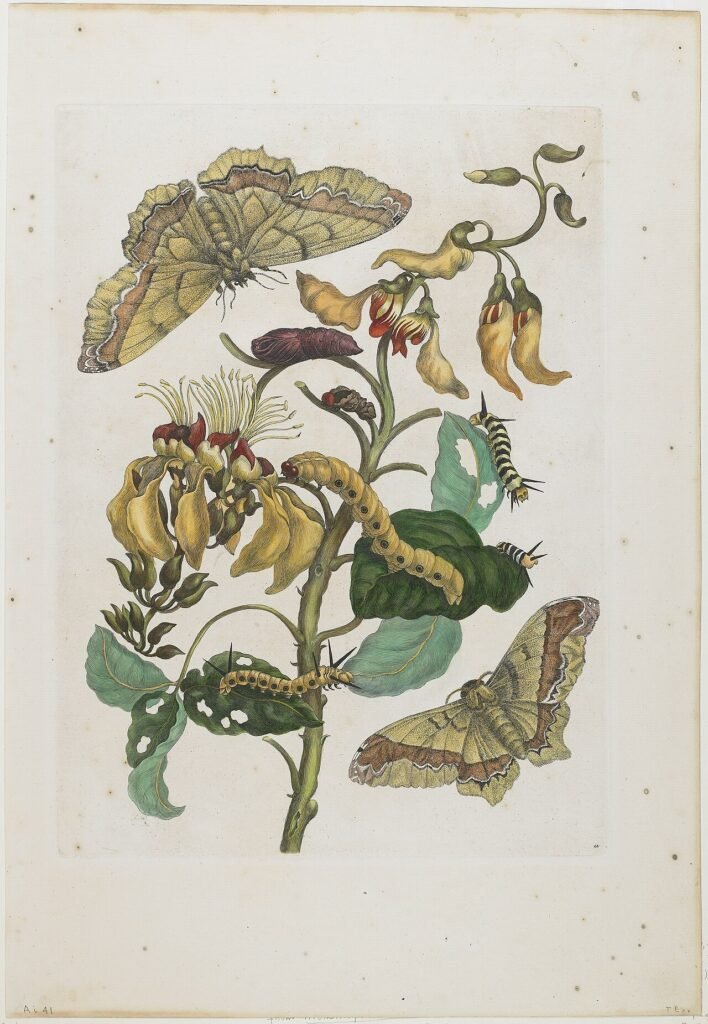
Around 1650 to 1850. As explorers brought home new plants, artists painted them with scientific care. Maria Sibylla Merian was one of the most remarkable. She raised caterpillars herself, and in 1699 she traveled to Suriname to paint insects alongside the very plants they lived on, from egg to butterfly.
Her work is a beautiful bridge between art and the garden, and a quiet inspiration for every herb and insect we paint in watercolor.
Plate from Metamorphosis of the Insects of Suriname, Maria Sibylla Merian, 1705
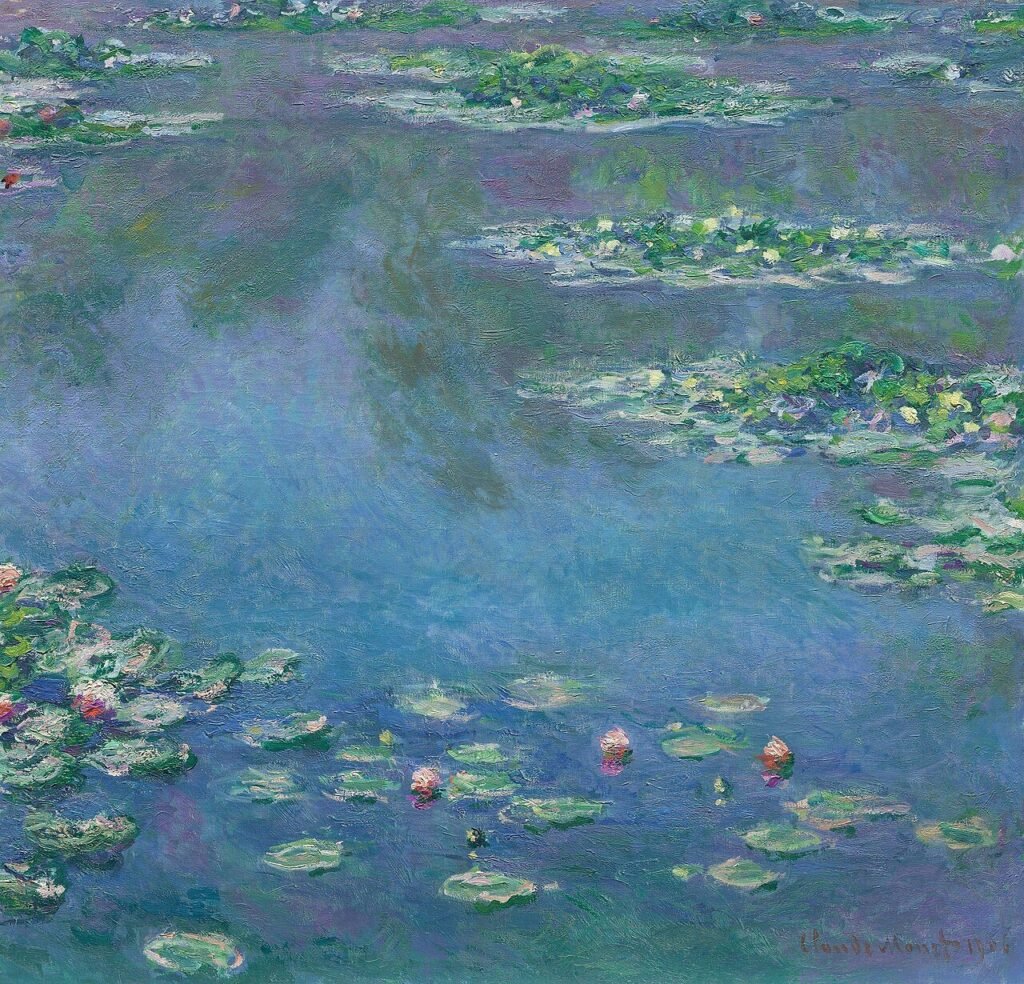
Water Lilies, Claude Monet, 1906
Painting the garden in light
Around 1870 to 1920. The Impressionists carried their easels outdoors to catch light as it changed. Claude Monet planted his own garden at Giverny, with a pond full of water lilies, and then painted it again and again for the rest of his life.
Monet once called his garden his most beautiful masterpiece. He reminds us that tending a garden and painting it can be one and the same.
The story continues with you
1900 to today. Modern artists opened new doors. Wassily Kandinsky wrote about the spiritual in art, Hilma af Klint painted abstract visions years before most, and Georgia O’Keeffe painted flowers up close and the wide-open landscapes of New Mexico.
Today the story is still being written, in studios, gardens, and kitchen tables everywhere. Pick up a brush, look closely at something that grows, and add your own page.
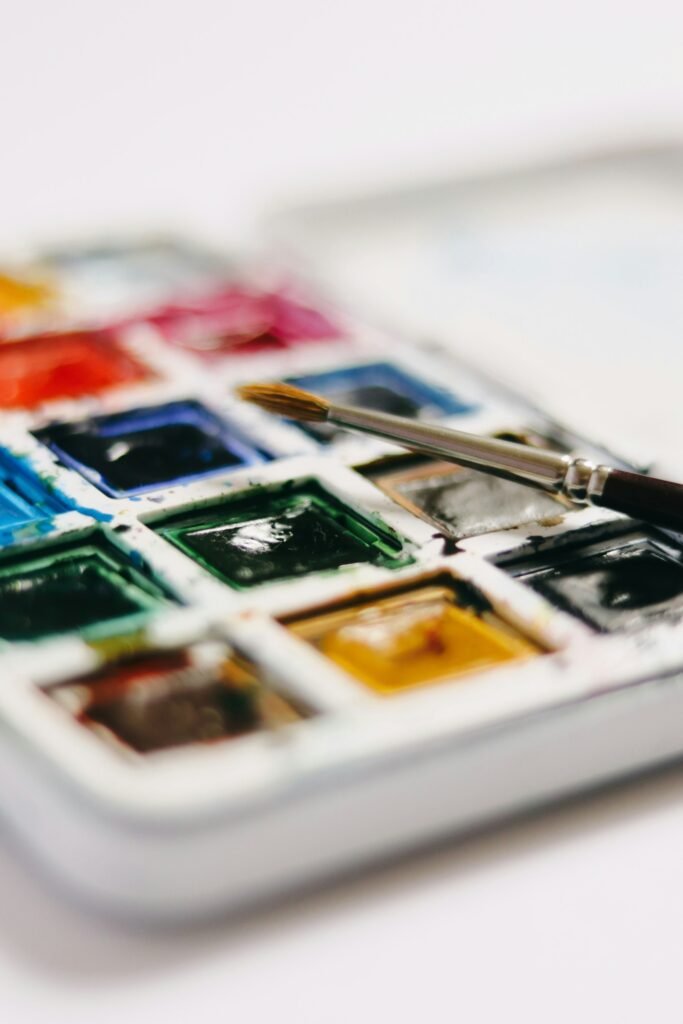
Watercolor paints and a brush
A simple map of the movements
A rough guide to the great movements of Western painting. The dates overlap, because artists never stopped painting just because a new style arrived.
Medievalabout 500 to 1400
Renaissance1300 to 1600
Baroque1600 to 1750
Rococo1720 to 1780
Neoclassicism1750 to 1830
Romanticism1780 to 1850
Impressionism1860 to 1890
Post-Impressionism1886 to 1905
Expressionism1905 to 1930
Cubism1907 to 1914
Abstract Expressionism1940s to 1950s
Contemporary1945 to today
Questions to ask any painting
When a painting catches your eye, these questions help you see it more deeply:
Who taught them?
Every artist learns from someone: a teacher, a workshop, or a tradition.
Who were their friends?
Artists influence each other, sharing ideas, studios, and sometimes paint.
What did they paint with?
Pigments, brushes, and surfaces shaped what was possible in each age.
Did they write about it?
Letters and journals often reveal what the artist hoped we would see.
Where and when?
Faith, politics, and daily life all leave their mark on a canvas.
How was it first received?
Some of today's treasures were laughed at when they were new.
Many stories, not just one
It’s tempting to see art history as a relay race, each style passing the baton to the next. Much of that story comes from Giorgio Vasari, an Italian painter whose Lives of the Artists (1550) celebrated the masters of Florence and Rome above all others.
But beauty has bloomed everywhere: in Japanese ink painting, Islamic geometric design, the sculpture of West Africa, the icons of the East, and countless quiet traditions besides. Every story of art is told from somewhere, so there is always more to discover, and room at the table for everyone.
From the Art History blog
Stories of artists and the works that shaped how we see.
New posts are on the way.
Follow the journey
New posts, workshop dates, and gallery shows, sent to your inbox. Art news only.