Herbal medicine is one of the oldest ways people have cared for themselves and their families. You don’t need a big apothecary to begin: a few common herbs, a kettle, and some curiosity are enough. Here are five things worth knowing before you start.
1. Look at the whole plant and the whole person
A plant is more than one active ingredient, and a person is more than one symptom. Traditional herbalists ask about sleep, digestion, stress, and daily habits before they reach for a remedy. Herbs work best alongside good food, water, rest, movement, and a life with meaning.
2. Taste tells you a lot
Long before laboratories, herbalists learned about plants by tasting them, and taste is still a useful guide:
- Bitter (dandelion root, chamomile) wakes up digestion.
- Pungent or spicy (ginger, cinnamon) warms and gets things moving.
- Aromatic (peppermint, lemon balm) often settles the stomach and lifts the mood.
- Sour (rose hips, hibiscus) tends to be cooling and refreshing.
- Sweet (licorice, oats) is usually nourishing and soothing.
- Salty or mineral-rich (nettle) feeds the body over time.
3. Warming or cooling, drying or moistening
Herbalists in many traditions describe both people and plants with simple pairs. Ginger feels warming; peppermint feels cooling. Sage is drying; marshmallow root is moistening. Someone who runs cold may feel better with warming herbs, and a dry, scratchy throat may welcome a moistening tea. Matching the herb to the person is the heart of the craft.
4. Tonics are for the long run
Some herbs are used for a quick, short-term effect. Others, called tonics, are taken gently and regularly to build strength over weeks and months, the way good food does. Nettle, oat straw, and rose hips are well-known nourishing tonics, usually enjoyed as daily teas.
5. Safety comes first
- Know your plant. Buy from a trusted source, or be completely sure of your identification before harvesting.
- Check for interactions. Herbs can interact with medicines. Ask your pharmacist.
- Start low and go slow. Try one new herb at a time so you can notice how it suits you.
- Know when to see a doctor. Herbs support everyday wellness; they don’t replace medical care.
Your first exercise: a taste test
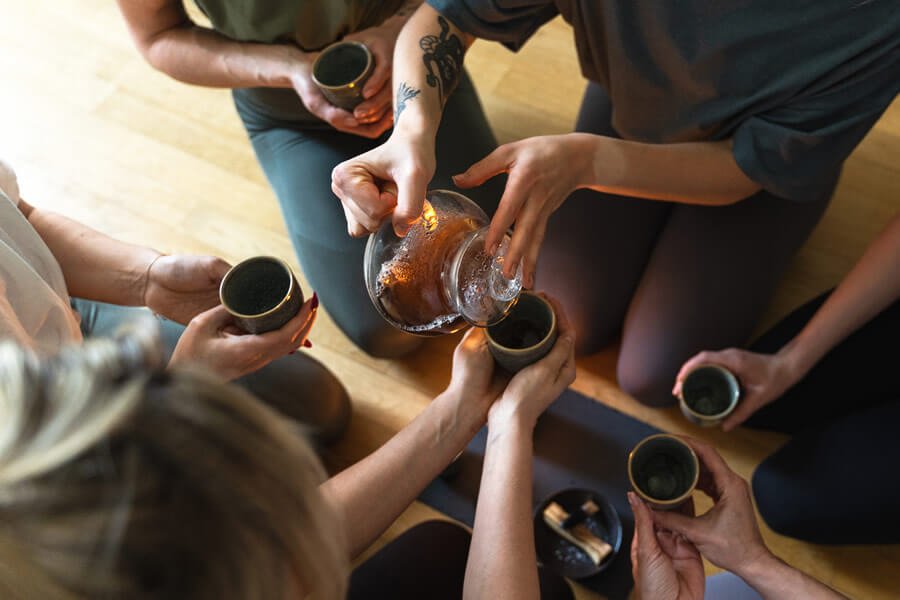
Make three small cups of tea: one of ginger, one of peppermint, and one of chamomile. Sip each slowly. Which feels warming and which feels cooling? Which is bitter, spicy, or aromatic? Write down what you notice. You’ve just started learning herbs the way herbalists always have: by paying attention.
Next in the Herbal Medicine Blog: one herb at a time, starting with chamomile.
This post is for learning only and isn’t medical advice. Talk with your doctor or pharmacist before using herbs, especially if you’re pregnant or nursing, take medication, or are managing a health condition.